
Industrial sites
Regenerating industrial sites
How can biodiversity limit pollution risks and create opportunities to build community trust?
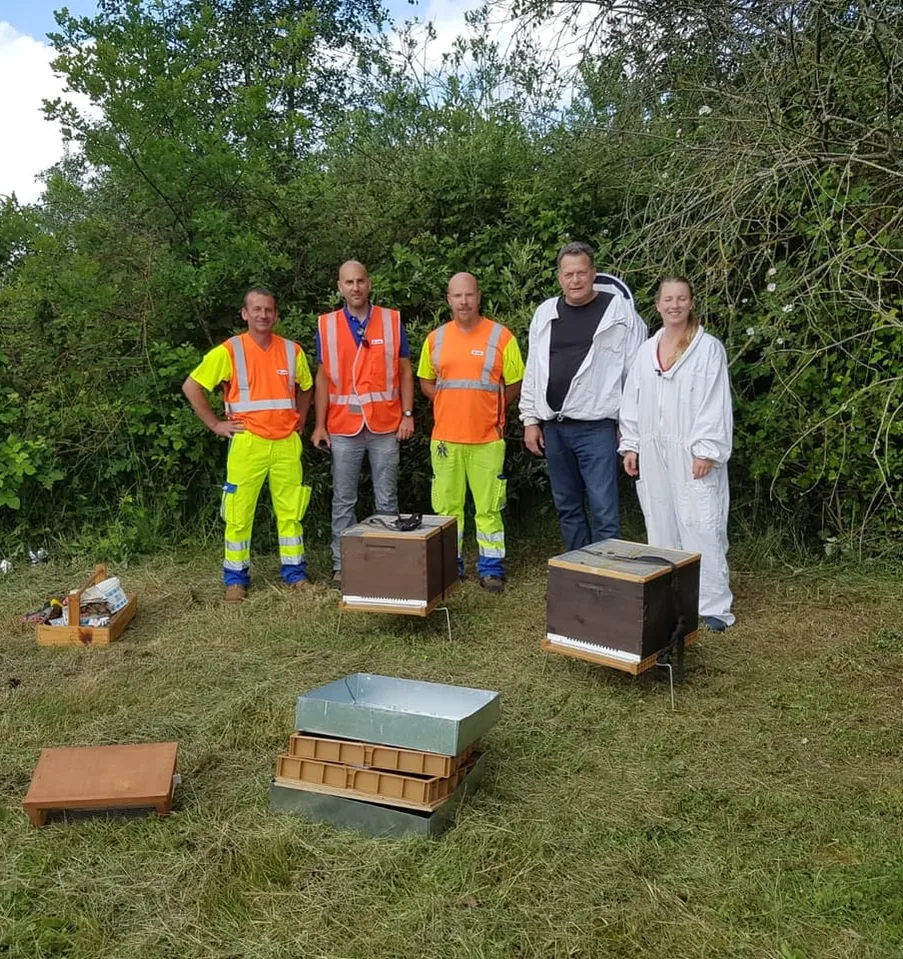
Industrial sites — from manufacturing and chemicals to recycling, energy, and extractives — face growing scrutiny from regulators, communities, and investors.
Facilities handling hazardous substances fall under the Seveso Directive with strict obligations on environmental risk management and transparency.
BeeOdiversity helps you monitor pollution and biodiversity, secure your license to operate, and turn environmental constraints into a lever for stakeholder trust and regeneration.
Where biodiversity matters for industrial operations
Biodiversity and pollution risks intersect with industrial operations at every level — from site acquisition to day-to-day management and corporate reporting.
Anticipate risks & secure your license to operate
Before expanding or renewing permits, you need to know what ecological risks your sites carry — proximity to sensitive areas, protected or invasive species, pollution pressures on air, soil, and water. Sites acquired or expanded without biodiversity screening can face permit delays, costly remediation, or community opposition that threatens operational continuity.
Monitor impact & improve operational control
Industrial activities generate pollution that can spread beyond site boundaries — heavy metals, PFAS, dioxins, VOCs, and other contaminants. Monitoring these emissions at landscape level provides an early warning system: it helps you anticipate incidents before they escalate, adapt processes where needed, and demonstrate to authorities and communities that your operations have no negative impact on the surrounding territory.
Turn compliance into regeneration
Environmental constraints can become opportunities. Nature-based solutions on industrial sites — ecological buffers, native planting, habitat restoration — reduce pollution exposure, improve site attractiveness for employees, and strengthen your territorial anchoring. Engaging local communities and municipalities around tangible biodiversity actions builds shared commitment and social acceptance.
Strengthen ESG reporting & stakeholder trust
CSRD (ESRS E4) requires disclosure of biodiversity impacts and dependencies. The Seveso Directive demands transparent environmental risk management. TNFD, EU Taxonomy, and VSME add further reporting layers. Investors and regulators expect verifiable, science-based environmental metrics — not just policies. Transparent data on pollution and biodiversity is your strongest lever for trust with communities, authorities, and financial stakeholders.
From risk to regeneration: how BeeOdiversity delivers
BeeOdiversity is a unique partner combining pollution and biodiversity monitoring, strategic consulting, and operational action management. We help industrial actors move from compliance to contribution — site by site, with science-backed data that communities, regulators, and investors trust.
Strategy & prioritisation
Understand — Prioritise — Plan
Screen your entire portfolio using satellite imagery and AI-driven geospatial analysis to identify which sites interact with sensitive areas and where the risk is highest. Our consultants then build on this data to deliver a full biodiversity and pollution risk strategy: materiality assessment, site prioritisation, mitigation roadmap with KPIs, and regulatory alignment.
BeeOimpact
Prioritise your sites based on their exposure to biodiversity risks — proximity to sensitive areas, ecosystem pressures, NACE activity codes. Screen thousands of sites remotely, at low cost, and focus mitigation where it matters most.
BeeOconsult
From pollution and biodiversity risk assessments to nature-positive action plans. Materiality analysis, regulatory alignment (CSRD, Seveso, TNFD), workshops, stakeholder engagement, and monitoring frameworks.
Monitoring & evidence
Measure — Detect — Demonstrate
For priority sites, we deploy nature-based monitoring solutions that go beyond inventory: they generate the evidence you need to demonstrate absence of negative impact, anticipate incidents, and build trust with stakeholders.
BeeOmonitoring
Detect pollutant emissions (heavy metals, PFAS, dioxins, VOCs, PCBs, PAHs) across 700 hectares (1,800 acres) beyond the site boundary — an early warning system that reveals exposure before incidents escalate.
Evidence that your activity has no negative impact on the territory, or targeted data to adapt processes where needed. Transparent results that strengthen dialogue with municipalities, communities, and neighbouring companies.
BeeOtel
A scalable, low-cost device deployable across many sites to rank and prioritise your portfolio at parcel level. Biodiversity and pollution indicators that let you act and demonstrate positive impact.
Optional fine-particle sensors (PM2.5, PM10) complement biological data. A participatory approach that engages employees and on-site stakeholders.
BeeOsoil
Industrial activity can contaminate or displace soils, disrupting ecological connectivity and introducing invasive species. eDNA-based soil analysis reveals what traditional methods miss.
Assess soil biodiversity and functionality — water retention, carbon sequestration, nutrient cycling — to mitigate risks and support site remediation or restoration strategies.
BeeOsurvey
On-site biodiversity inventories and improvement plans by our Suitably Qualified Ecologists — establishing a robust baseline of habitat quality, species richness, and ecological connectivity.
Identification of invasive species and protected species — real risks for industrial operators that can block permits, trigger remediation, or generate liability.
Actions & reporting
Act — Track — Communicate
Turn monitoring data into measurable impact on every site — through a combination of expert ecological guidance and a centralised action management platform.
Ecological expertise
Our ecologists and bioengineers design site-specific interventions: ecological buffers, native planting, pollinator habitats, sustainable water management, and habitat restoration plans.
Tailored pollution reduction strategies and nature-based solutions that are ecologically sound, adapted to industrial constraints, and deliver measurable environmental outcomes.
BeeOinitiative
Define site-level objectives, select from +80 ready-to-use initiatives scored by biodiversity impact (1–5) and cost, and track implementation across all your sites with standardised KPIs.
Each site has its own dashboard — initiatives, progress, timelines, budgets. Aggregated portfolio-level metrics export directly into CSRD, TNFD, and GRESB reporting templates.
Regulatory alignment
Our solutions support compliance with the frameworks that matter to industrial operators.
Seveso Directive
Environmental risk management and transparency obligations
CSRD / ESRS E4
Mandatory biodiversity and pollution disclosure
TNFD
Nature-related financial disclosure
EU Taxonomy
Do No Significant Harm biodiversity criteria
SBTN
Science-Based Targets for Nature
VSME
Voluntary Sustainability Reporting Standard for non-listed SMEs
IED / BAT
Industrial Emissions Directive and Best Available Techniques