
Water stewardship
Regenerating water stewardship
Embrace biodiversity as an opportunity to protect your most precious resource.
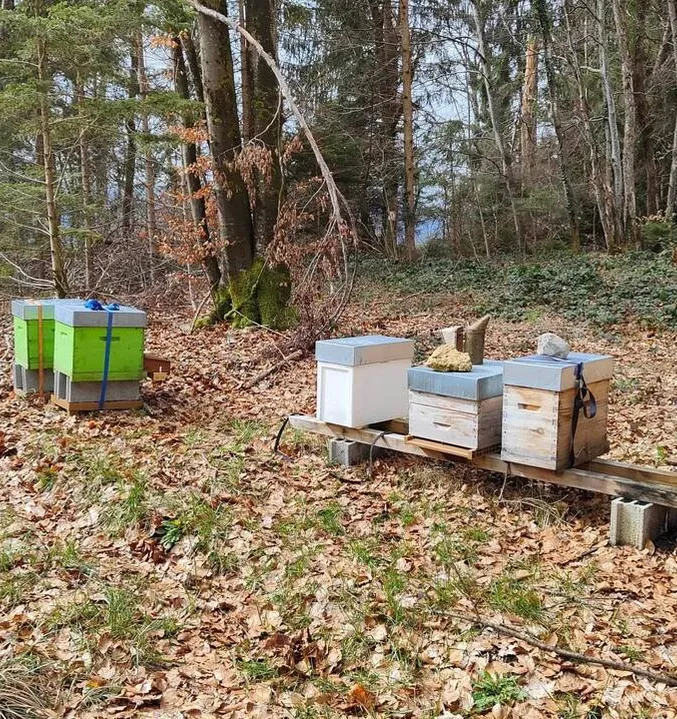
The water industry — bottled water producers, water utilities, and water management companies — faces growing challenges in ensuring the long-term quality and sustainability of water resources. Pollution, climate change, and habitat degradation threaten water catchment areas, while regulatory pressures and treatment costs continue to rise.
Biodiversity plays a key role in safeguarding water resources, acting as a natural filtration system that enhances ecosystem resilience and prevents contamination.
BeeOdiversity helps you monitor pollution upstream — before it reaches groundwater — engage stakeholders across your catchment, and turn environmental data into a lever for water protection and brand trust.
Where biodiversity matters for the water industry
Biodiversity and water quality are deeply interconnected — from the health of catchment ecosystems to the cost of treatment and the trust of consumers.
Protect water catchment areas from pollution
Pesticides, nitrates, heavy metals, and PFAS from agricultural and industrial activities can take months or years to reach groundwater. By the time they appear in water quality tests, contamination may already be widespread and costly to remediate. Monitoring the environment upstream — the land, air, and vegetation around your catchment zones — provides an early warning system that detects pollution before it reaches your water sources, allowing you to act preventively rather than reactively.
Reduce treatment costs & secure water quality
Water decontamination is expensive — and in some cases, pollution makes water sources unusable. For bottled water producers, contamination can mean the loss of a mineral water label. For utilities, it translates into rising treatment costs and operational risk. Investing in upstream environmental monitoring and prevention is significantly cheaper than downstream remediation. Nature-based approaches address contamination at the source, reducing the need for costly treatment infrastructure.
Engage stakeholders & strengthen territorial anchoring
Preserving water resources is a territory-wide issue that can only be tackled with the help of all the players involved — farmers, communities, municipalities, and regulators. Transparent environmental data provides a common language for dialogue and collaboration. When stakeholders see quantified evidence of pollution sources and biodiversity improvements, they become partners in water protection rather than opponents. Natural reserves, farmer workshops, and community engagement programmes built around monitoring data create shared commitment and lasting impact.
Meet regulatory & ESG requirements
The Water Framework Directive, the Drinking Water Directive, CSRD (ESRS E4), EU Taxonomy, and TNFD all require water companies to assess and disclose their environmental impacts and dependencies. Investors and consumers expect proof — not just policies. Quantitative biodiversity and pollution indicators, benchmarked across sites and over time, provide the foundation for credible compliance, ESG reporting, and sustainability certification (ISO, B Corp).
From monitoring to protection: how BeeOdiversity delivers
BeeOdiversity is a unique partner combining upstream pollution monitoring, biodiversity assessment, strategic consulting, and stakeholder engagement. We help water companies move from reactive water testing to proactive catchment protection — with science-backed data that regulators, communities, and consumers trust.
Strategy & prioritisation
Understand — Prioritise — Plan
Screen your catchment zones, abstraction points, and prospective sourcing locations using satellite imagery and AI-driven geospatial analysis to identify where biodiversity and pollution risks are highest. Our consultants then build on this data to deliver a full water stewardship strategy: risk assessment, site prioritisation, mitigation roadmap, and regulatory alignment.
BeeOimpact
Prioritise catchment zones and abstraction points based on their exposure to biodiversity and pollution risks — proximity to agricultural activities, ecosystem sensitivity, land use pressures. Prospect new sourcing locations by comparing environmental risk profiles. Screen hundreds of sites remotely, at low cost, and focus investment where it matters most.
BeeOconsult
From biodiversity and pollution risk assessments to water stewardship roadmaps. Materiality analysis, regulatory alignment (CSRD, TNFD, Water Framework Directive), stakeholder engagement planning with farmers and municipalities, and certification support (ISO, B Corp).
Monitoring & evidence
Measure — Detect — Demonstrate
For priority catchment zones, we deploy nature-based monitoring solutions that detect pollution before it reaches your water — an upstream early warning system that goes far beyond traditional water quality testing. Many water extraction licences also carry an obligation to manage and monitor biodiversity on the surrounding site. Our solutions address both dimensions simultaneously: pollution detection and biodiversity assessment in a single, continuous monitoring programme — a distinct advantage in public tenders where integrated environmental data and innovation are differentiating factors.
BeeOmonitoring
Detect 520+ pesticide molecules, nitrates, heavy metals, and PFAS circulating across 700 ha (1,800 acres) of your catchment zone — an early warning system that reveals contamination in the environment before it reaches groundwater. A patented, nature-based approach using bees as living sensors: non-intrusive, continuous, and representative of the real conditions across your territory — a level of coverage and sensitivity that conventional water sampling cannot match.
Simultaneously assess plant diversity, ecosystem health, and pollinator vitality — fulfilling the biodiversity monitoring obligations that often accompany water extraction licences. Identify the sources of pollution with enough precision to take targeted preventive action. This dual output — pollution and biodiversity in a single programme — is a strong differentiator in public tenders and concession renewals.
BeeOtel
A scalable, low-cost device deployable across many catchment sites to assess biodiversity and pollinator health at parcel level — 40 ha (100 acres). Rank and compare zones, identify where ecological pressure is highest, and prioritise interventions.
Engage local stakeholders through a participatory approach — farmers, communities, and land managers see their own data and become active partners in catchment protection.
BeeOsoil
Soil health directly affects water quality — a healthy soil filters, retains, and purifies water naturally. eDNA-based analysis reveals soil functionality: water retention capacity, organic matter cycling, microbial communities involved in natural filtration.
Understand the link between agricultural practices, soil biodiversity, and the water cycle around your catchment. Track the impact of land use changes and regenerative practices on the soil's capacity to protect your water resources.
BeeOsurvey
On-site ecological inventories by our Suitably Qualified Ecologists — establishing baselines on habitat quality, species richness, and ecological connectivity across your catchment areas and production sites.
Assessment of riparian zones, wetlands, and buffer strips — the natural infrastructure that protects water quality. Identification of invasive species and protected species relevant to permit compliance and site management.
Actions & reporting
Act — Track — Communicate
Turn monitoring data into measurable catchment protection — through a combination of expert ecological guidance, farmer engagement, and a centralised action management platform.
Ecological expertise
Our ecologists and bioengineers design catchment-specific interventions: buffer zones and riparian planting, wetland restoration, native vegetation corridors, and sustainable land management recommendations.
Workshops with farmers to share monitoring results, sensitise them to pesticide and fertiliser risks, and co-construct reduction pathways. Training on sustainable agricultural alternatives — because protecting water means engaging the people who manage the land around it.
BeeOinitiative
Define site-level objectives, select from 50+ biodiversity-enhancing initiatives scored by impact (1–5) and cost — including buffer zones, wetland restoration, native planting, and habitat creation tailored to water catchment contexts.
Each site has its own dashboard — initiatives, progress, timelines, budgets. Aggregated metrics across all your catchment zones export directly into CSRD, TNFD, and sustainability reporting templates.
Regulatory alignment
Our solutions support compliance with the frameworks that matter to the water industry.
Water Framework Directive
Good ecological and chemical status of water bodies
Drinking Water Directive
Quality standards for water intended for human consumption
CSRD / ESRS E4
Mandatory biodiversity and pollution disclosure
EU Taxonomy
Do No Significant Harm biodiversity criteria for water-related activities
TNFD
Nature-related financial disclosure for water-dependent sectors
SBTN
Science-Based Targets for Nature, including freshwater