
Nature restoration
Restoration that regenerates nature — and creates value
Design, monitor, and evidence restoration projects that deliver measurable ecological recovery, valuable ecosystem services, and lasting impact for local communities.
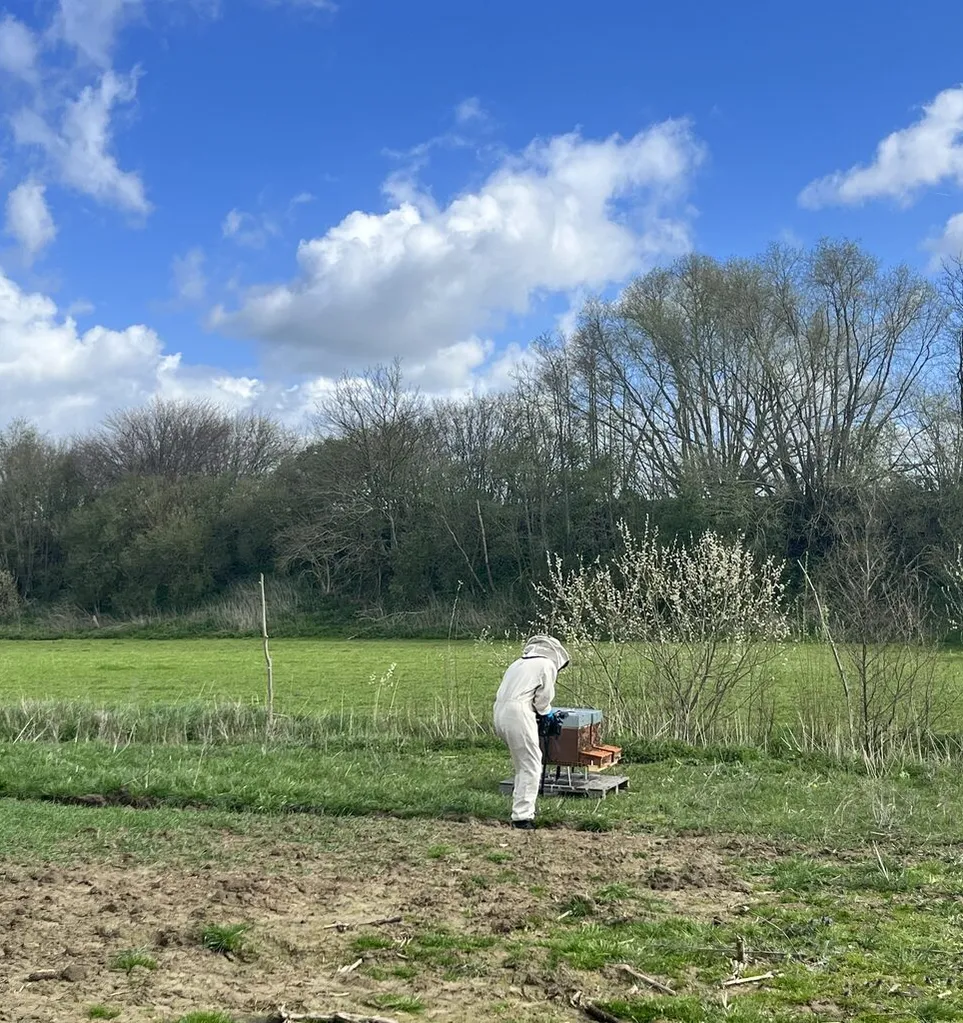
Restoration is where biodiversity ambition meets the ground. Whether you restore a degraded landscape, rewet a wetland, green a city, or regenerate a productive territory, success comes down to one thing: proving that ecosystems are actually recovering. Restoration projects generate real value — ecosystem services such as water retention, soil health, carbon and pollination; positive impact and livelihoods for local communities; and, increasingly, biodiversity credits.
But that value is only credible if it is measured.
Funders, regulators, and communities no longer accept trees-planted counts; they expect science-based evidence of outcomes. BeeOdiversity combines remote and ground-truth monitoring, ecological and strategic expertise, and action management to help you identify where to act, design effective interventions, measure recovery over time, and demonstrate credible impact — for nature, for people, and for the value it creates.
Where biodiversity matters for nature restoration
From baseline diagnostics to field interventions and long-term stewardship, biodiversity data determines whether restoration delivers real, valuable, and lasting outcomes.
Restore and value ecosystem services
Restoration is not only about species — it is about the services healthy ecosystems provide. Well-designed nature-based solutions regenerate water retention and flood mitigation, soil health and nutrient cycling, pollination, carbon sequestration, and microclimate regulation such as heat reduction and air quality. These services carry real value for the territories and stakeholders around a project — reduced flooding, more resilient agriculture, cooler cities, cleaner water, healthier soils. Making that value explicit, and measuring it, turns restoration from a cost line into a shared asset for landowners, businesses, and public authorities alike.
Unlock biodiversity credits and results-based finance
Restoration projects increasingly need to prove — and to value — their impact. Emerging biodiversity credit markets, corporate net-positive and no-net-loss commitments, and results-based finance all rest on the same requirement: rigorous, verifiable measurement of biodiversity uplift over time. Robust baselines, standardised indicators, and continuous monitoring are what separate credible outcomes from greenwashing — and what will allow restoration actors to access biodiversity credits, unlock funding, and demonstrate additionality. Measuring recovery is no longer optional; it is what makes restoration bankable.
Engage stakeholders around a shared project
Restoration rarely depends on a single actor. Landowners, farmers, municipalities, citizens, NGOs, and funders all have a stake in the outcome — and a project only lasts if they are brought on board. Biodiversity is a powerful way to align them: it is visible, local, and meaningful to everyone. Shared, field-based data gives every stakeholder a common language and a reason to participate — farmers adapting practices, citizens taking part in monitoring, authorities backing the programme. Turning stakeholders from spectators into active contributors builds the awareness, skills, and shared stewardship that keep restored ecosystems alive long after a project ends — while creating local livelihoods and social value.
Meet restoration targets and reporting requirements
Restoration is moving from voluntary to expected. The EU Nature Restoration Law sets legally binding targets for Member States, land managers, and project developers, while the Kunming-Montreal Global Biodiversity Framework commits to restoring 30% of degraded ecosystems by 2030. In parallel, CSRD (ESRS E4), TNFD, and the EU Taxonomy require organisations to disclose biodiversity impacts, dependencies, and the restoration actions they take. Grounding a project in science-based baselines and continuous monitoring is what makes it defensible to regulators, credible to funders, and eligible for permits, certification, and public support.
From data to action: how BeeOdiversity delivers
BeeOdiversity is a unique partner combining nature-based monitoring, strategic consulting, and operational action management — from landscape strategy down to the individual site. We help restoration actors move from ambition to measurable impact, with science-backed data that funders, regulators, and communities trust.
Design & advice
Understand — Design — Plan
Before breaking ground, understand the site and design the right project. Screen the landscape to see where restoration matters most and what constrains it — then let our bioengineers design the interventions, species mix, and management plan that will deliver measurable recovery.
BeeOimpact
Screen sites and landscapes remotely to map sensitive areas, protected species, and habitat connectivity — so you can design the project where it delivers most impact and anticipate constraints early.
Prioritise across large territories at low cost, and focus field monitoring and interventions where they matter most.
BeeOconsult
Bioengineering and ecological expertise to design the restoration project itself — choose the right species and actions, and define the management plan that will guide implementation.
Materiality and opportunity analysis, target-setting, and stakeholder engagement workshops with communities and authorities — with alignment to TNFD, SBTN, the EU Nature Restoration Law, and emerging biodiversity-credit standards.
Monitoring & evidence
Measure — Detect — Demonstrate
For priority sites, we deploy the full range of our monitoring solutions — remote and ground-truth — to establish baselines, detect pressures, measure recovery over time, unlock biodiversity credits, and demonstrate credible impact to funders and communities. All of them apply to restoration.
BeeOmonitoring
Obtain plant diversity and pollinator health data at landscape level — 700 ha (1,800 acres) — to establish restoration baselines, target actions, and measure the positive impact of planting and management over time.
Identify pollutants (pesticides, heavy metals, nitrates) circulating across the landscape and assess their origin and impact on ecosystem services — so you can address the pressures that would otherwise undermine recovery.
BeeOtel
A scalable, low-cost device deployable across many parcels to assess pollinator presence and biodiversity at parcel level — 40 ha (100 acres). Rank and compare restoration plots, and identify where ecosystems are recovering and where intervention is still needed.
Track progress continuously and make the data visible to local stakeholders — turning them into active participants in the restoration rather than subjects of reporting.
BeeOsoil
Soil is the foundation of any restoration — yet conventional analyses miss the biological dimension. eDNA-based analysis reveals soil functionality: water retention, carbon sequestration, nutrient availability, and natural regulation.
Track how soil recovers under restoration over time, and generate the indicators that link soil biodiversity to the ecosystem services your project delivers — water regulation, carbon, fertility.
BeeOsurvey
On-site ecological inventories by our Suitably Qualified Ecologists — establishing robust baselines on habitat quality, species richness, and ecological connectivity, and tracking species return over time.
Complemented by eDNA species detection (BeeOdna) to identify species without visual observation — the field-level evidence that grounds restoration claims and supports biodiversity-credit verification.
Actions & reporting
Act — Track — Communicate
Turn the plan and the data into implementation and credible reporting — with hands-on project support in the field and a platform that digitalises the follow-up and mobilises every stakeholder.
Project management & expertise
Our ecologists and bioengineers help you follow and steer the project — coordinating implementation on the ground, keeping interventions on track (habitat creation, native planting, wetland and watercourse restoration, invasive-species management, soil regeneration), and adjusting the management plan as ecosystems respond.
Co-construction with local communities, farmers, and authorities keeps restoration objectives aligned with local reality — because lasting restoration depends on shared stewardship.
BeeOinitiative
Digitalise the follow-up: define site-level objectives, select from 60+ initiatives scored by biodiversity impact (1–5) and cost, and track implementation across all your sites with standardised KPIs.
Give each site and stakeholder its own dashboard — initiatives, progress, timelines, budgets — so everyone can take the right actions. Aggregated metrics aligned with TNFD, SBTN, and CSRD, and structured to support biodiversity-credit and results-based finance. Export directly into your reports.
Regulatory alignment
Our solutions support compliance with — and access to — the frameworks and finance mechanisms that matter to restoration.
EU Nature Restoration Law
Legally binding restoration targets for Member States, land managers, and project developers
Kunming-Montreal GBF
Target 2: restore 30% of degraded ecosystems by 2030
CSRD / ESRS E4
Mandatory disclosure of biodiversity impacts, dependencies, and restoration actions
TNFD
Nature-related financial disclosure using the LEAP approach
SBTN
Science-Based Targets for Nature, including land and freshwater
EU Taxonomy
Substantial contribution to ecosystem restoration and Do No Significant Harm criteria
Biodiversity credits
Robust baselines and monitoring to generate credible, verifiable credits and access results-based finance