
5 trees to cool cities: biodiversity to the rescue of real estate in the face of urban heat islands
Credits : lefteye81
Urban heat islands: a concrete risk for your real estate assets
In urban centres, this phenomenon is amplified by urban heat islands (UHIs): artificial microclimates generated by impermeable surfaces (concrete, asphalt) that absorb heat during the day and release it at night 2, 3, combined with waste heat from air conditioning systems and a lack of vegetation 6.
As a result, temperature differences of several degrees can be observed between a greened neighbourhood and a mineralized street. This is a documented health risk factor according to Santé publique France 7, but also a growing issue for the attractiveness and functional value of your assets.
3. Terrin, J-J. (dir.). (2015). Villes et changement climatique – Ilots de chaleur urbains. Parenthèses. 285p.
4. Hamdi, R., Giot, O., Berckmans, J., De Troch, R., Deckmyn, P., Termonia, P. (2015). Future climate of Brussels and Paris for the 2050s under the A1B scenario. Urban Climate (Vol.12), pp. 160-182.
6. Cantat O. (2004). L’îlot de chaleur urbain parisien selon les types de temps. Norois, 191, 75-102.
Tree planting and greening: the most effective natural cooling lever
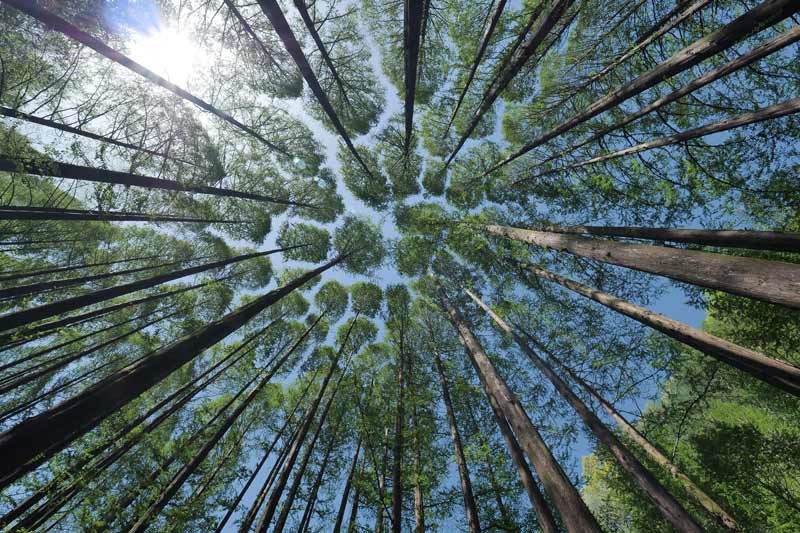
Faced with this challenge, the most effective response remains large-scale greening, and in particular urban trees, which act through two complementary mechanisms:
- Shading: direct interception of solar radiation on façades and outdoor spaces.
- Evapotranspiration: by drawing water from the soil and releasing it through their leaves, trees actively cool the surrounding air—functioning as a true natural air conditioner without energy consumption.
However, not all tree species perform equally well in the climate conditions expected by 2050. Below are 5 species selected for their climate resilience and effectiveness in dense urban environments 8.
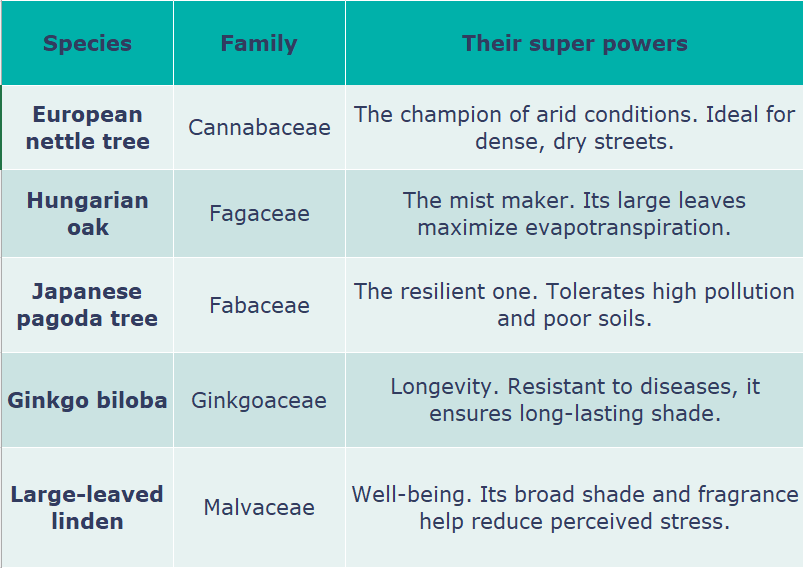
5 resilient trees to enhance biodiversity and combat heat islands on your sites
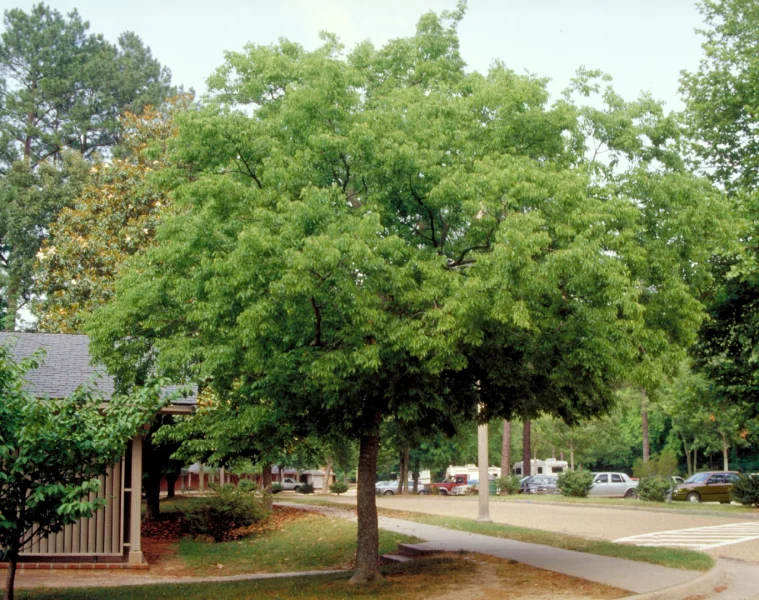
1. Mediterranean hackberry (or European nettle tree – Celtis australis), the champion of arid conditions
Native to the Mediterranean basin, the Mediterranean hackberry (Celtis australis) is well suited for Europe’s future climate. It tolerates extreme heat, compacted soils, and low-humidity urban environments. Its dense foliage provides excellent solar radiation interception. Highly resistant to diseases and wind, it is a low-maintenance tree that supports optimized asset management.
- Heat island benefit (UHI): withstands extreme heat and poor or compacted soils. Its dense foliage provides excellent solar radiation interception.
- Resilience: highly resistant to diseases and very wind-resistant.
Credits: Van den berk
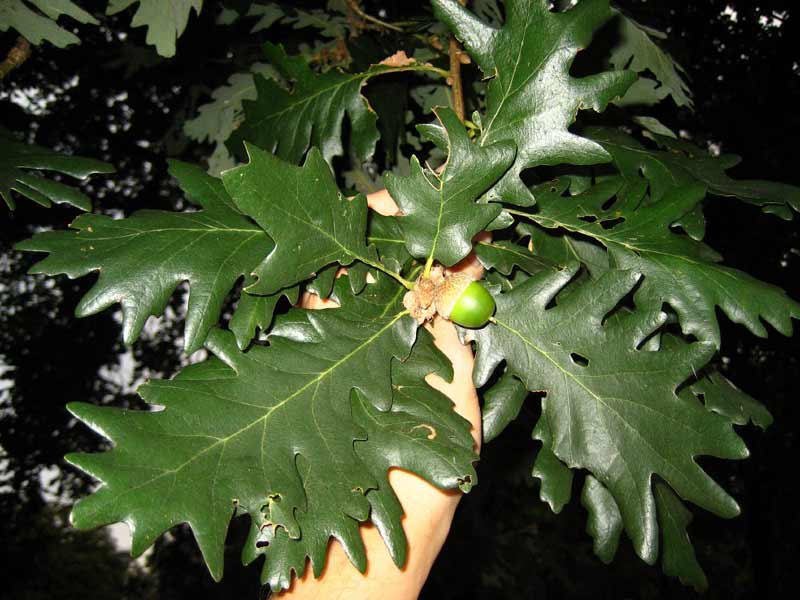
2. Hungarian oak (Quercus frainetto), the natural “mist maker”
Among all oak species, this one is the most suited to hot, dry summers, significantly outperforming the native pedunculate oak (Quercus robur) in urban environments. Its very large, deeply lobed leaves maximize evapotranspiration surface area and actively cool the air. It also shows good tolerance to calcareous and urban soils, making it ideal for green spaces around residential buildings or office campuses.
- Cooling benefit: its very large, lobed leaves provide a high evapotranspiration surface, actively cooling the surrounding air.
- Resilience: : good tolerance to calcareous and urban soils.
Credits : bomengids.nl
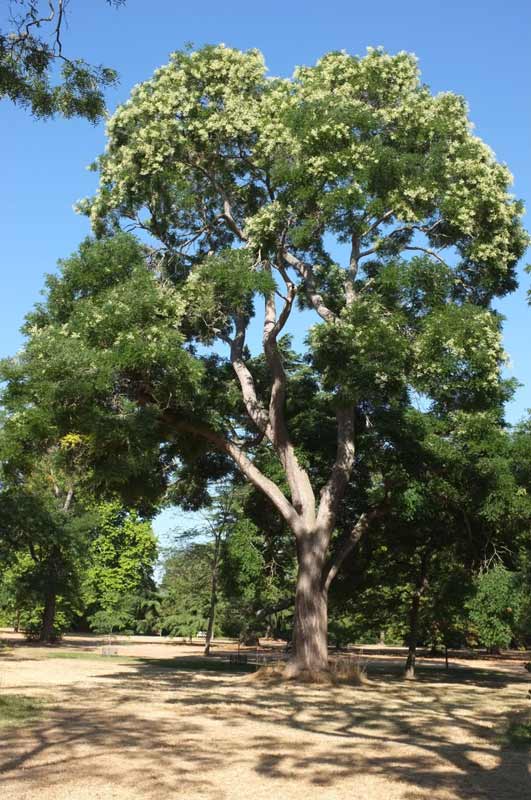
3. Japanese pagoda tree (Styphnolobium japonicum), the resilient one
Commonly planted in cities in Southern Europe, the Japanese pagoda tree adapts very well to northern France and Belgium. Its relatively fast growth makes it a visible-return investment. An additional advantage: its late summer flowering supports pollinating biodiversity during peak heatwaves, a strong asset for biodiversity reporting. It also shows excellent resistance to urban air pollution.
- Heat island benefit (UHI): relatively fast growth and late summer flowering that supports biodiversity during heatwave periods.
- Resilience: excellent resistance to urban air pollution.
Credits: treesandshrubsonline.org
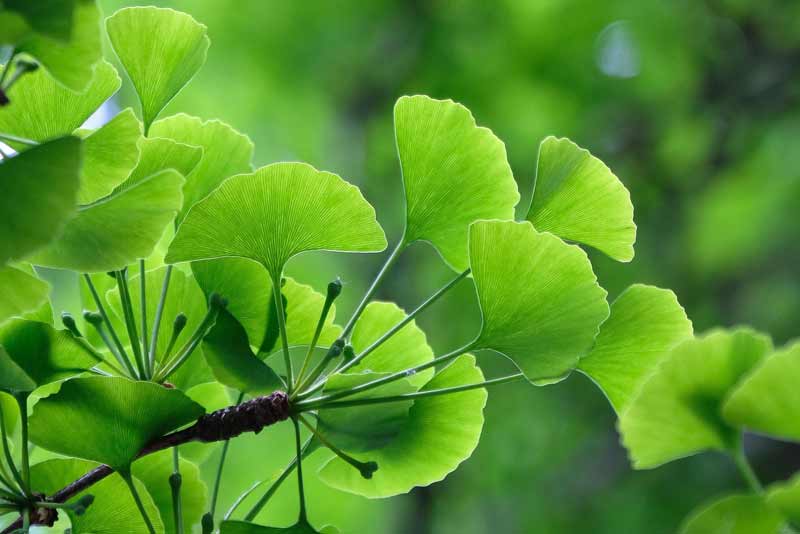
4. Ginkgo (Ginkgo biloba), longevity and resilience
A true “living fossil,” the ginkgo is one of the most biologically resilient tree species. It is virtually indestructible (insects, fungi, pollution, extreme thermal stress: none of these significantly affect it). Its carbon storage capacity is high. Although its evapotranspiration is moderate, it provides durable shading where other species would fail—making it a key pillar of long-term urban canopy strategies.
- Cooling benefit: high carbon storage capacity. Its guaranteed survival under extreme conditions makes it a pillar of durable urban canopy cover.
- Resilience: virtually indestructible (insects, fungi, pollution, and even severe thermal stress).
Credits: wal_172619
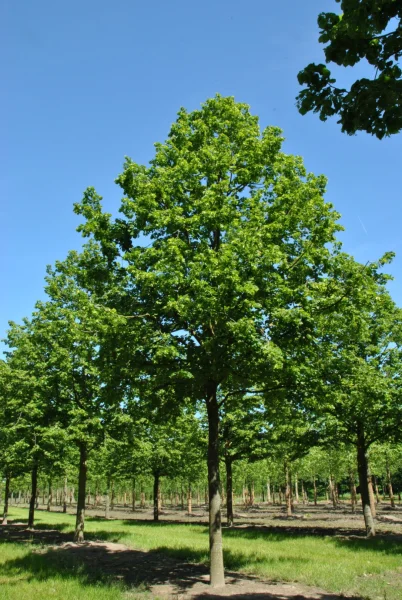
5. Large-leaved linden (or Large-leaved lime – Tilia platyphyllos), well-being
- Cooling benefit: its large leaves and crown structure create a strong “parasol effect.” Under a linden tree, perceived temperature can drop by several degrees thanks to intense leaf transpiration.
- Note: it is important to de-seal (de-pave) tree pits to allow it to access the water needed for effective cooling.
Credits: Van den berk
Three conditions for effective greening in practice
De-sealing soils (depaving)
Diversifying species
Layering vegetation (structuring vegetation in strata)
Biodiversity and ESG performance: a value driver for your assets
For real estate groups, thoughtful greening of their sites is no longer an aesthetic option. It simultaneously addresses several strategic challenges:
- Improved thermal comfort for occupants
- Reduced energy costs related to air conditioning
- Measurable contribution to biodiversity and CSR commitments
- Enhanced attractiveness and functional value of assets
BeeOdiversity supports real estate stakeholders in diagnosing, designing, and monitoring their greening strategies, relying on field data and concrete biodiversity indicators.
If you would like to assess the cooling and biodiversity potential of your sites, contact our experts.
Fill in the form an we will get back to you soon.
BeeOdiversity develops projects in several European countries, Switzerland and the United States. Its tools and services can be used the world over.
To contact us from Belgium and abroad : +32 2 428 00 82
Head office :
Avenue Arnaud Fraiteur 15-23
1050 Brussels, Belgium
Like the idea of working with us ?



0 Comments