
IPBES Business & Biodiversity Report 2026: 4 Key Findings
The 2026 IPBES Business and Biodiversity Assessment confirms what the science has long suggested: nature risk is local, and monitoring gaps are a key barrier. Here are 4 findings every sustainability team should act on.
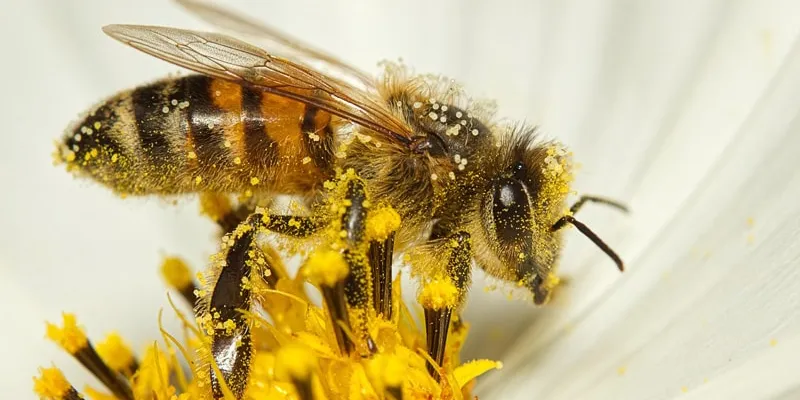
4 things the IPBES Business and Biodiversity Assessment got right
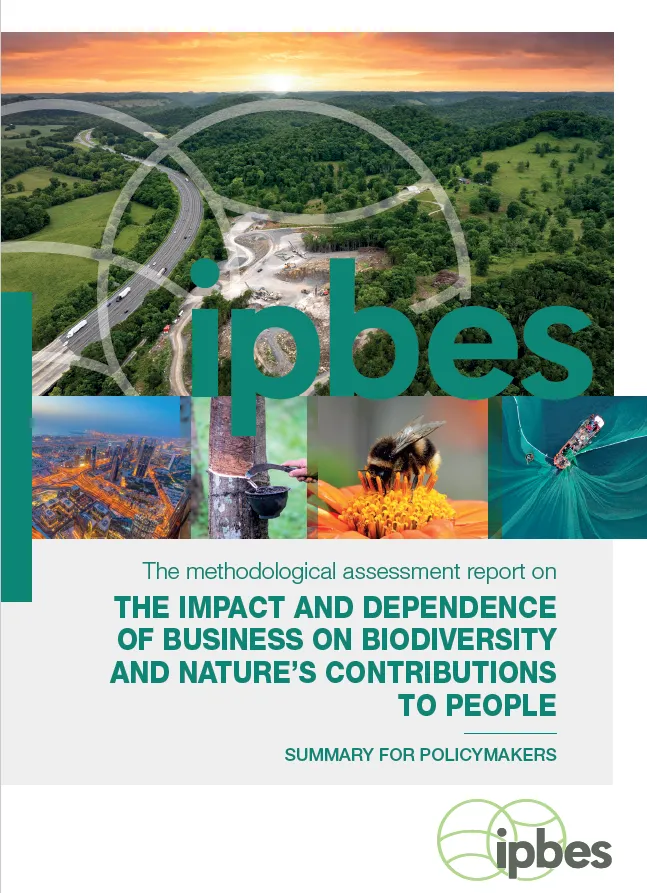
Credits : Ipbes
1. "Every business depends on biodiversity"
The report's opening finding is blunt: every business, regardless of size, sector or location, depends on biodiversity. More than 50% of global GDP is estimated to be nature-dependent. And yet the assessment flags something equally important. The knowledge gaps are most acute at local and site-specific levels, precisely where management decisions are made.
This is not an abstract problem. A food company can map biodiversity hotspots globally and still not know what is happening in the 3 km radius around its processing facility. A water producer can access national soil health statistics and still be blind to the microbial communities that filter its source water.
2. Measurement is possible, but it needs to be location-based to be useful
One of the report's most practically useful findings is its assessment of measurement methods. It evaluates approaches across five categories: location-based, participatory, spatial analysis, life cycle, and macro-scale, and is clear on one point: for operational site management and for actually observing change in nature, location-based methods are the most applicable.
Spatial analysis and macro-scale modelling are useful for screening and prioritisation. But when it comes to tracking real changes on the ground: whether a restoration measure is working, whether a pollinator population is recovering, whether soil is rebuilding. You need direct, physical measurement at the site.
3. Pollination, soil and plant diversity are named as critical
The IPBES report is explicit about which ecosystem services underpin business resilience most directly. Pollination services, soil functionality, and plant diversity figure prominently — as both dependencies that companies rely on and as areas where business impacts are most acute.
On pollination: the evidence is well-established but still underused in corporate risk assessment. Our bee monitoring provides a direct proxy for pollinator health and abundance, tracked annually, at the specific sites that matter to our clients. Decline in bee colony health or foraging range is an early signal of degrading ecosystem function, detectable years before it shows up in yield data.
On soil: the report highlights persistent gaps in soil biodiversity data at the business-relevant scale. Soil eDNA analysis is one of the few methods that addresses this directly, mapping microbial communities, fungal networks, and biological indicators of soil functionality from a simple core sample. It turns the most invisible part of the ecosystem into measurable, trackable data.
On plant diversity: pollen DNA extracted from our hives identifies the plant species bees visit across a wide radius, building a picture of landscape-level floral diversity that no transect walk or remote sensing tool can replicate at the same resolution. This matters for agrifood companies, water producers, extractive industries, and any sector whose operations sit within a living landscape.
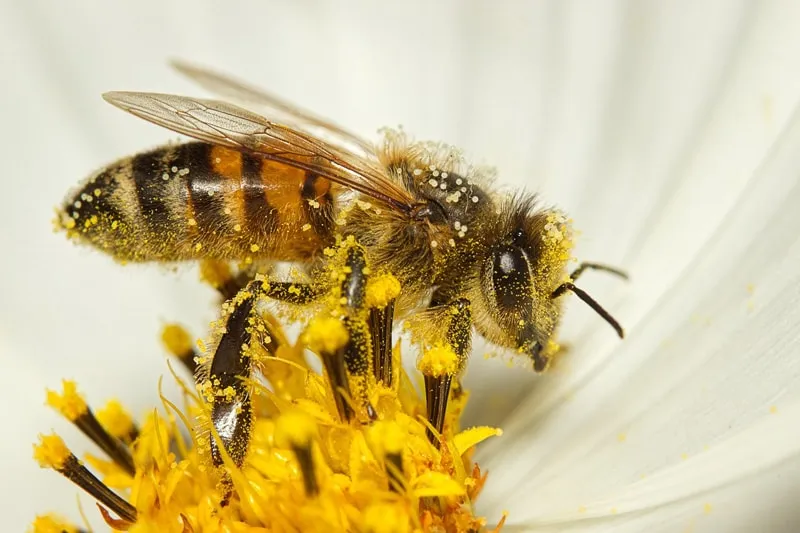
Credits : mirey2222
4. The report identifies monitoring gaps as a core barrier
Perhaps the most directly relevant finding for us: the IPBES assessment explicitly flags "persistent gaps in knowledge, monitoring, and indicators", especially at local and sector-specific levels, as one of the key barriers preventing businesses from managing their nature-related impacts and dependencies effectively.
It is not enough to screen risks at a portfolio level and consider the job done. The report calls for strengthening monitoring systems and knowledge infrastructures to enable informed decision-making. And critically, it distinguishes between tracking potential changes (pressure indicators) and observing actual change in nature (state indicators). Noting that most corporate biodiversity efforts stop at the former.
BeeOdiversity's annual monitoring cycles are designed to close this gap. By returning to the same sites each year, with the same methodology, we generate true time-series data that captures actual change in ecosystem state — not just modelled pressure. This is precisely what LEAP-aligned assessments, CSRD disclosures, and science-based targets require: evidence that actions are translating into outcomes, not just commitments into reports.
If you would like to discuss the right next steps for your organisation, get in touch with our team.